
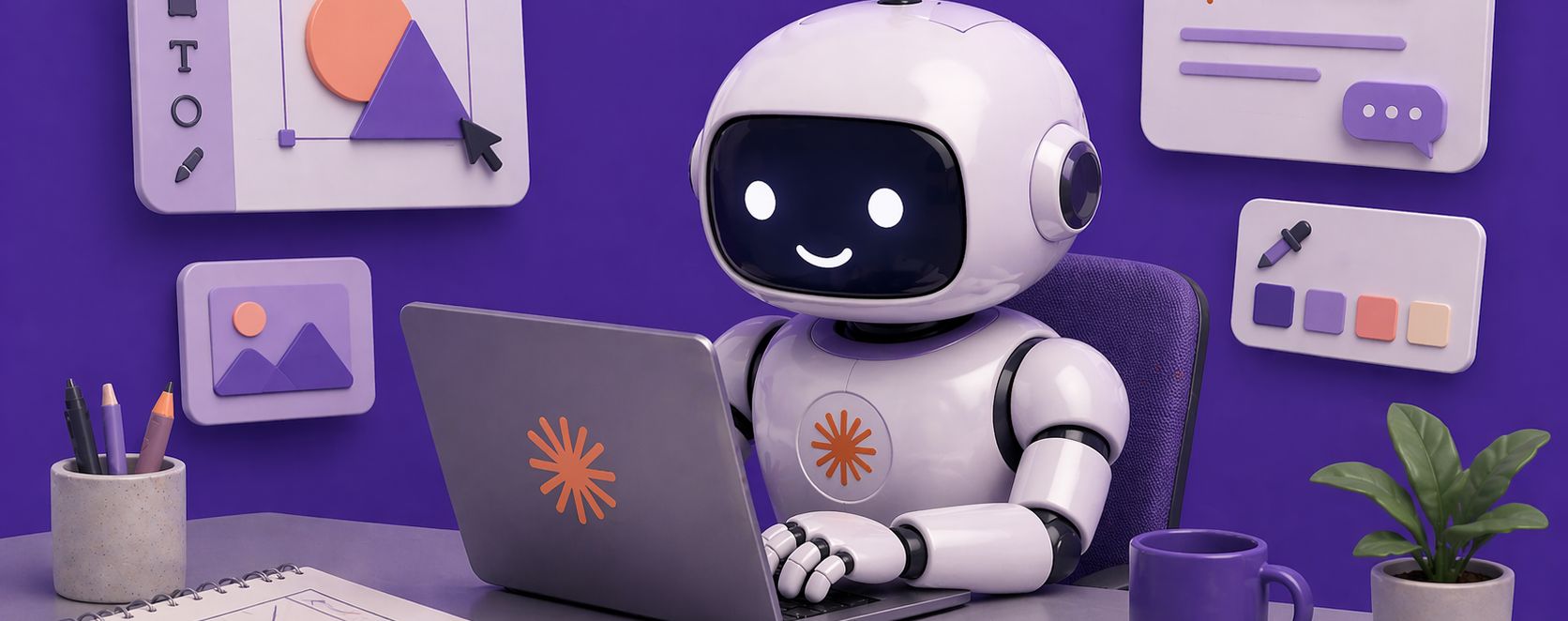
Claude Design: Transforming the Future of Creative Workflows
- Introduction
- What Is Claude Design
- How Claude Design Works
- Key Benefits for Designers and Businesses
- Transforming Design Workflows
- Conclusion
The design industry is evolving rapidly as artificial intelligence becomes more integrated into creative workflows. Designers are increasingly expected to produce high-quality visuals faster while maintaining consistency and creativity across projects [2]. As a result, AI-powered tools are emerging to support designers in meeting these growing demands [1].
One of the latest innovations in this space is Claude Design, a product introduced by Anthropic to help users generate visuals quickly and efficiently [1]. This tool leverages advanced AI capabilities to translate text prompts into visual outputs, enabling faster ideation and execution [2]. By simplifying early-stage design work, Claude Design allows designers to focus more on refining creative concepts rather than starting from scratch [2].
Claude Design is an AI-powered design tool that enables users to create visual content through natural language prompts [2]. Instead of relying solely on traditional design software, users can describe what they want, and the system generates visual concepts based on that input [2]. This approach makes the design process more efficient and accessible, especially for early ideation stages [2].
The tool is part of Anthropic’s broader expansion into creative AI applications beyond text generation [1]. It is built on advanced AI models that can interpret user intent and convert it into relevant visual outputs.This allows designers to explore multiple creative directions quickly and iterate more efficiently [2].
Anthropic is also reportedly developing more advanced AI models to enhance design capabilities further, indicating ongoing innovation in this space. These developments highlight how AI is becoming increasingly important in shaping modern design workflows [3].
Claude Design operates through a prompt-based interface where users input descriptions of the visuals they want to create. These prompts can include layout ideas, color schemes, and content structure, which the system uses to generate corresponding designs. This reduces the need for manual setup and speeds up the design process significantly [2].
The system can generate multiple variations from a single prompt, allowing designers to compare different creative directions quickly. This iterative capability helps users refine their ideas and select the most effective design approach [2]. By automating repetitive tasks, Claude Design enables designers to focus on higher-level creative decisions. Additionally, the tool supports rapid prototyping by allowing teams to create visual drafts quickly for review and feedback. This improves collaboration between designers and stakeholders by making it easier to visualize ideas early in the process [2].
One of the main benefits of Claude Design is increased productivity, as it reduces the time required to generate initial design concepts [2]. Designers can complete projects more efficiently by automating repetitive and time-consuming tasks. This is especially valuable in fast-paced environments where speed is critical. Another key advantage is enhanced creativity, as the tool allows users to experiment with multiple design ideas quickly. By generating different variations, designers can explore a broader range of creative possibilities without significant time investment. This encourages innovation and helps teams discover more effective design solutions.
Claude Design also improves accessibility by enabling non-design professionals to create visual content using simple prompts [2]. This reduces dependency on specialized design teams for basic tasks and allows other departments to produce content more independently. As a result, businesses can scale their content production more efficiently. From a business perspective, AI-powered design tools help streamline workflows and reduce operational costs by minimizing manual work [2]. Organizations can allocate resources more effectively while maintaining high-quality output. This makes tools like Claude Design valuable for companies aiming to improve efficiency and competitiveness [2].
AI tools like Claude Design are transforming how designers work by shifting their focus from execution to strategy and creativity. Instead of spending time on repetitive tasks, designers can concentrate on storytelling, branding, and user experience [2]. This leads to more meaningful and impactful design outcomes. Collaboration is also enhanced, as teams can quickly generate and share visual concepts for feedback [2]. This makes it easier to align on ideas and iterate efficiently across departments. Faster feedback loops contribute to more agile and responsive design processes [2].
Furthermore, Claude Design enables a more flexible and iterative workflow, where users can adjust prompts and generate new outputs based on feedback [2]. This adaptability is essential in dynamic business environments where requirements often change. It allows teams to respond quickly without restarting the design process from scratch [2].
Claude Design represents a major step forward in AI-powered creative tools by enabling visual generation through simple text prompts. It simplifies the design process, accelerates ideation, and enhances overall productivity for designers and teams. By combining automation with creative flexibility, it supports more efficient and innovative workflows.
The impact of Claude Design extends beyond individual designers to entire organizations by improving collaboration and reducing operational costs. As AI continues to advance, its role in design will become increasingly central to how businesses create and deliver visual content. Companies that embrace these tools will be better equipped to drive innovation and maintain a competitive edge in the evolving digital landscape.
Notes and References
- Anthropic. Introducing Claude Design by Anthropic Labs - Anthropic. https://www.anthropic.com/news/claude-design-anthropic-labs
- Malik, A. (2026). Anthropic Launches Claude Design, A New Product For Creating Quick Visuals - TechCrunch. https://techcrunch.com/2026/04/17/anthropic-launches-claude-design-a-new-product-for-creating-quick-visuals/
- Palazzolo, S. Exclusive: Anthropic Preps Opus 4.7 Model, AI Design Tool - The Information. https://www.theinformation.com/briefings/exclusive-anthropic-preps-opus-4-7-model-ai-design-tool


