
Fashion Forward: How AR & VR Are Transforming the Retail Experience
- A brief look to Virtual Reality & Augmented Reality
- AR and VR in Fashion Retai
- Virtual Try-On Experiences
- Immersive Virtual Stores and Showrooms
- Marketing and Storytelling
- Efficiency and Sustainability
- Challenges in Adoption
- High Costs and Technical Complexity
- Integration with Legacy Systems
- Digital Infrastructure Limitations
- Conclusion
- Kang, J. (2025, Sep 9). Top Examples of Augmented Reality (AR) in Fashion Retail - NetGuru. https://www.netguru.com/blog/augmented-reality-fashion-retail-examples
- Soliwal, T. (2025, Feb). The Role of AR and VR in Shaping the Future of Fashion Retail - Fibre2Fashion. https://www.fibre2fashion.com/industry-article/10293/the-role-of-ar-and-vr-in-shaping-the-future-of-fashion-retail
- HeuriTech. (2025). The digital transformation of the fashion industry: Fad or future? - HeuriTech. https://heuritech.com/fashion-industry-digital-transformation-innovation/
Technologies that felt futuristic are now shaping the way industries function, with Virtual Reality (VR) and Augmented Reality (AR) at the forefront. VR immerses users in entirely digital environments using headsets, while AR overlays digital content onto the real world through devices like smart glasses.
Their impact extends far beyond entertainment. In education, AR brings textbooks to life through interactive visuals. In healthcare, VR helps surgeons practice complex procedures in safe virtual environments. Real estate firms now showcase virtual property tours, while automotive companies let customers “test drive” cars through VR. These examples show how AR and VR are revolutionizing decision-making, personalization, and engagement across industries [2].
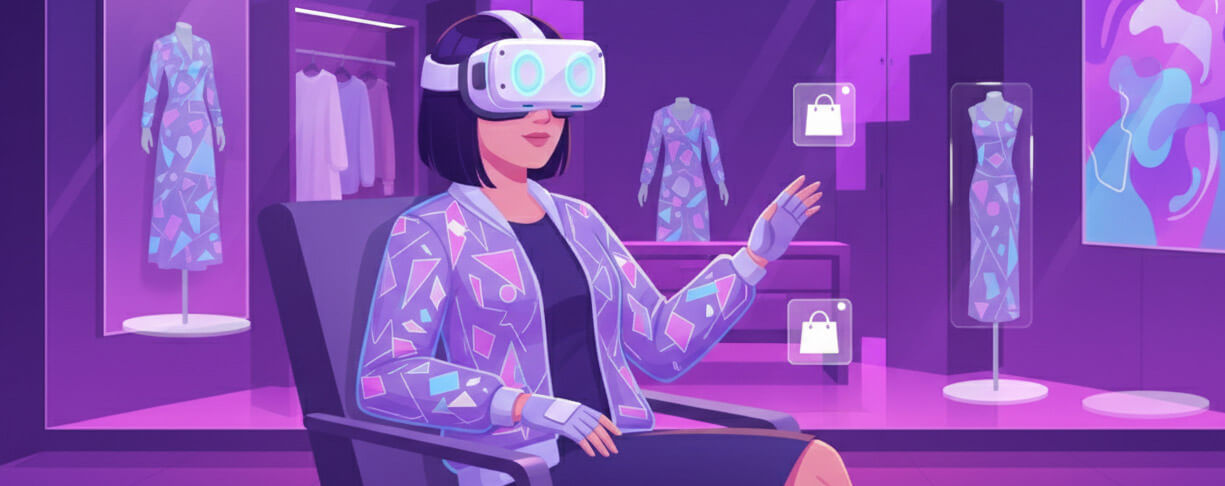
Among all sectors, fashion retail stands out as one of the most dynamic spaces where AR and VR are making significant inroads. The fashion industry thrives on creativity, visualization, and consumer experience, making it a natural match for immersive technologies.
Fashion retailers have been quick to embrace AR and VR, using them to create richer shopping journeys, connect with digital-native consumers, and reduce inefficiencies in design and production.
AR-powered try-on tools allow shoppers to preview clothing, shoes, or accessories on their own bodies using smartphone cameras or smart mirrors. For example, Zalando partnered with Snapchat to launch a feature where customers could “wear” items digitally and share the results. Similarly, Burberry integrated AR into Google search results, allowing users to view products in lifelike 3D before purchase. These tools increase consumer confidence in online shopping by showing fit, color, and style more realistically [1].
VR has enabled brands to reimagine retail spaces without the constraints of physical locations. Luxury house Fendi, for instance, offered virtual appointments where clients entered curated VR showrooms and interacted with stylists remotely. This blend of exclusivity and convenience allows brands to maintain high-touch service while scaling globally [1].
Fashion is not just about products but also about narrative. AR-driven campaigns make these stories more interactive and memorable. Adidas created AR activations highlighting sustainability by letting customers scan items and reveal immersive visuals of how recycled materials were used in production. Such campaigns engage consumers emotionally while reinforcing brand values [1].
AR and VR are also powerful behind the scenes. Instead of producing multiple physical samples, brands can design and test prototypes digitally. This reduces both costs and environmental waste, addressing one of fashion’s biggest criticisms: overproduction. Digital design tools also allow faster iterations, helping brands respond quickly to trends [3].
Collectively, these applications are redefining what it means to shop for fashion. They bridge the physical and digital worlds, enabling experiences that are personal, engaging, and efficient.
Despite the promise of AR and VR in fashion, there are still critical hurdles that brands must overcome to scale adoption.
Developing AR and VR platforms requires significant investment in hardware, advanced software, and skilled professionals. For smaller or mid-sized brands, these upfront costs can feel prohibitive. Maintaining these systems also demands ongoing resources, making it difficult for companies without deep budgets to compete [3].
Even when brands invest in AR/VR, the technology must integrate smoothly with existing e-commerce platforms, inventory management systems, and customer databases. If integration fails, the experience can be disjointed. For example, a customer may virtually try on a jacket only to find it missing from the online store due to mismatched systems [2].
Immersive experiences require reliable internet speeds and modern devices. In markets where connectivity is inconsistent or consumers rely on older smartphones, AR/VR activations may not function properly. This restricts reach and limits accessibility, especially in emerging economies where digital fashion could otherwise flourish [2].
By addressing these three core challenges, brands can unlock the full potential of AR and VR in retail
AR and VR are no longer distant concepts, they are shaping fashion retail today. From interactive try-ons to immersive showrooms and sustainable prototyping, these technologies enhance consumer experiences while driving efficiency and innovation. They help solve long-standing problems like high return rates, limited engagement, and unsustainable production practices, while opening new creative avenues for storytelling.
However, their adoption is not without obstacles. High costs, system integration issues, and infrastructure limitations remain pressing concerns. Overcoming these challenges will require strategic investment, collaboration with providers, and an emphasis on building accessible solutions.
Looking forward, AR and VR will likely become standard in fashion retail as hardware becomes more affordable, software more accurate, and consumers more digitally fluent. The future of shopping will not be bound by physical or digital alone but will blend the best of both worlds. Brands that embrace AR and VR now are not only keeping pace with innovation, they are shaping the future of fashion itself.


