
The Impact of Interactive & Immersive Learning on Student Outcomes
- Introduction
- What Is Simulation Training in Healthcare
- The Role of Simulation Training in Healthcare Education
- Key Benefits of Simulation Training
- The Impact of Technology on Simulation Training
- Conclusion
Healthcare education requires more than theoretical knowledge because medical professionals must also develop practical skills, decision-making abilities, and confidence in high-pressure situations [1]. Traditional classroom learning alone is often insufficient for preparing students and healthcare workers to handle complex clinical environments safely and effectively [1]. As healthcare systems become more advanced and patient expectations continue to rise, educational institutions are increasingly adopting simulation-based training to improve learning outcomes and patient safety [2].
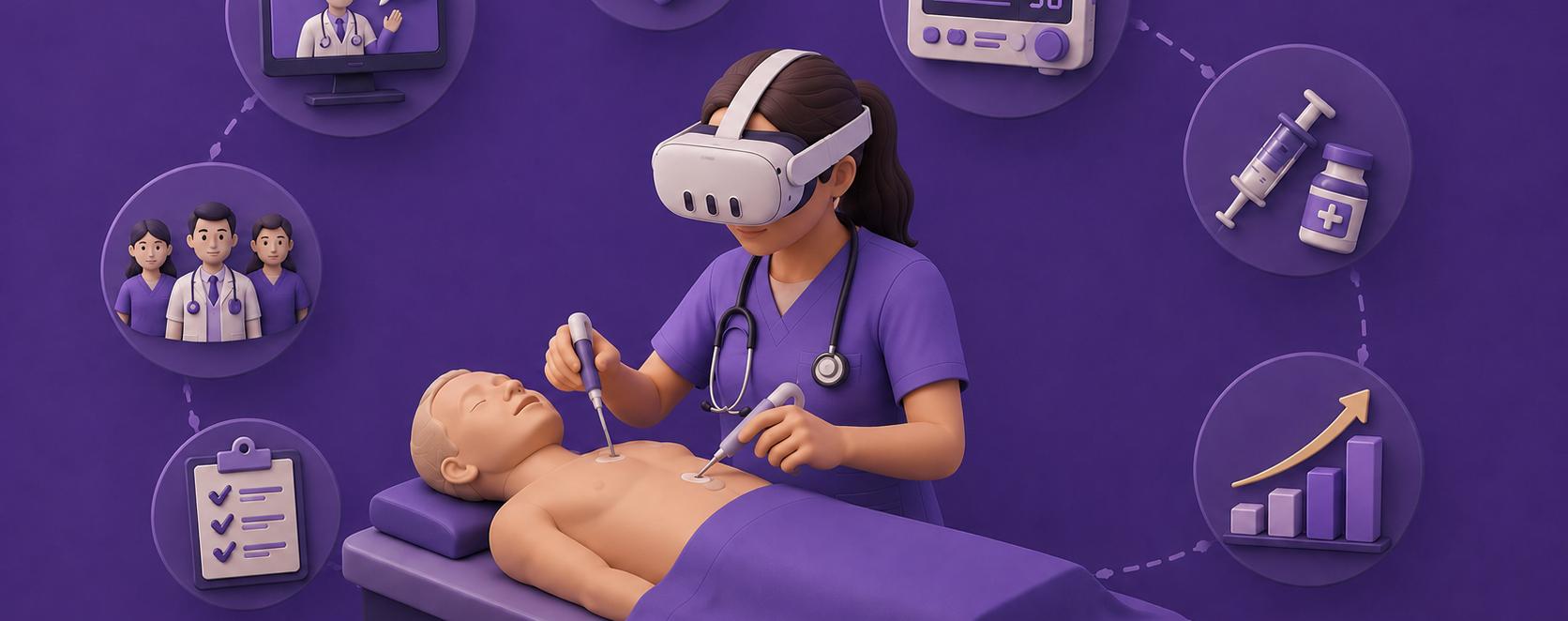
Simulation training allows learners to practice clinical procedures and patient interactions in controlled environments that replicate real-world healthcare scenarios [1]. These training methods reduce risks associated with learning directly on patients while helping students gain hands-on experience before entering clinical practice [2]. Advances in technology, including virtual simulation and immersive learning systems, are further transforming how healthcare professionals are trained across hospitals, universities, and medical institutions [3].
Simulation training in healthcare refers to educational methods that recreate realistic medical situations for learning and skill development [1]. These simulations may involve manikins, digital environments, virtual reality systems, or standardized patient interactions designed to mimic real clinical experiences [2]. The primary goal is to provide learners with practical exposure in a safe and controlled setting where mistakes become opportunities for learning rather than risks to patient safety [1].
Modern healthcare simulation can replicate various scenarios such as emergency response, surgery preparation, patient assessment, and team communication exercises [2]. By exposing learners to realistic situations, simulation training helps bridge the gap between theoretical education and real clinical practice [2]. This approach enables students and healthcare professionals to build competency before facing actual patient care situations [1].
Simulation training plays a critical role in improving clinical competency and practical understanding among healthcare learners [1]. Through repeated practice, students can refine technical procedures and gain familiarity with medical protocols in realistic environments [2]. This repetitive learning process helps strengthen confidence and reduces anxiety when transitioning into real healthcare settings [3].
Another important role of simulation training is enhancing critical thinking and decision-making skills [2]. Healthcare professionals often work in unpredictable situations where rapid responses and accurate judgement are essential [1]. Simulation exercises expose learners to time-sensitive scenarios that require them to assess conditions, prioritize actions, and communicate effectively under pressure [2].
Simulation-based learning also supports interdisciplinary collaboration among healthcare teams [2]. Many medical procedures involve coordination between nurses, physicians, technicians, and emergency response teams [1]. Training simulations allow these groups to practice teamwork and communication in realistic clinical scenarios, improving operational efficiency and patient outcomes [2].
One of the most significant benefits of simulation training is improved patient safety [1]. By practicing procedures in simulated environments, healthcare professionals can develop skills and identify mistakes before treating real patients [2]. This reduces the likelihood of medical errors and enhances the quality of care delivered in clinical settings [1].
Simulation training also improves learner confidence by allowing students to gain practical experience gradually [3]. Many healthcare learners experience stress and uncertainty during their transition from academic learning to real patient care [3]. Simulated practice environments help learners become more comfortable with clinical procedures and patient interactions before entering professional practice [3].
Another key advantage is the ability to recreate rare or high-risk medical situations that may not occur frequently during traditional clinical rotations [2]. Emergency response scenarios, trauma cases, and critical care situations can be simulated repeatedly to ensure learners are adequately prepared [2]. This exposure helps healthcare professionals respond more effectively during real emergencies [1].
In addition, simulation training supports continuous learning and professional development for experienced healthcare workers [1]. Medical technologies and treatment protocols continue to evolve rapidly, requiring professionals to update their knowledge and skills regularly [2]. Simulation environments provide an effective way for healthcare organizations to conduct ongoing training without disrupting patient care operations [1].
Technological advancements are significantly enhancing the effectiveness of healthcare simulation training [3]. Virtual reality, augmented reality, and immersive digital platforms are creating more interactive and realistic learning environments for healthcare students and professionals [3]. These technologies allow learners to engage with detailed simulations that replicate clinical procedures, patient reactions, and emergency situations with high accuracy [3].
Immersive simulations also improve learner engagement and knowledge retention by making educational experiences more interactive [3]. Instead of passively observing procedures, learners actively participate in decision making and problem solving throughout the training process [3]. This hands-on approach strengthens both technical and cognitive skills in healthcare education [2].
Artificial intelligence is also beginning to support simulation training by providing adaptive learning experiences and performance analysis [3]. AI-driven systems can evaluate learner performance, identify skill gaps, and recommend personalized training improvements [3]. This helps educational institutions deliver more targeted and effective healthcare training programs [3].
Simulation training is transforming healthcare education by providing safer, more practical, and more effective learning experiences for medical professionals [1]. Through realistic clinical scenarios and immersive technologies, healthcare learners can build confidence, improve technical skills, and strengthen decision-making abilities before treating real patients [2]. This approach supports better patient safety, stronger teamwork, and improved healthcare outcomes across the industry [1].
As technology continues to evolve, simulation training will become increasingly advanced through virtual reality, artificial intelligence, and immersive digital platforms [3]. These innovations will further enhance healthcare education by making training more interactive, scalable, and personalized [3]. Organizations that invest in modern simulation training solutions will be better positioned to prepare healthcare professionals for the growing demands of the medical industry [2].
Notes and References
- Vital Simcenter. The Importance of Simulation Training in Healthcare - Vitalsimcenter. https://vitalsimcenter.com/en/the-importance-of-simulation-training-in-healthcare/
- Sivrikaya, U. & Gonenli, G. (2024). MEDICAL SIMULATION: The Vision of Learning in Healthcare - Esmed. https://esmed.org/transforming-healthcare-education-with-medical-simulation/
- Elendu, C., et. al (2024). The Impact Of Simulation-Based Training In Medical Education: A Review - National Library of Medicine. https://pmc.ncbi.nlm.nih.gov/articles/PMC11224887/


