
Top Business Industries Investing in Virtual Reality Adoption
Virtual reality is rapidly evolving from an experimental technology into a practical business tool that is reshaping how organizations train employees, design products, and engage customers [1]. As VR hardware becomes more affordable and software platforms mature, industries across healthcare, education, manufacturing, retail, and real estate are increasing investments in immersive applications [2]. These industries are leveraging VR to reduce costs, improve performance, and create experiences that traditional digital tools cannot replicate [3]. This article explores the top industries investing in virtual reality applications and explains how immersive technology is transforming real-world operations [1][2][3].
- Healthcare and Medical Services
- Education and Corporate Training
- Manufacturing and Industrial Operations
- Retail and Ecommerce
- Real Estate and Architecture
- Cultural Tourism and Entertainment
- Conclusion
- Thompson, S. (2024). VR Applications: Key Industries already using Virtual Reality - Virtual Speech. https://virtualspeech.com/blog/vr-applications
- Unity. (2024). AI Hardware Market Size. The Rise of AR and VR Across Industries - Unity. https://unity.com/resources/rise-of-ar-vr-across-industries
- Vardomatski, S. (2025). VR Applications: Top 10 Industries Using Virtual Reality - HQ Software Lab. https://hqsoftwarelab.com/blog/virtual-reality-applications/
Healthcare is one of the most advanced industries adopting virtual reality due to its ability to simulate complex medical scenarios safely and effectively [1]. VR is widely used in medical training to help surgeons, nurses, and students practice procedures without putting patients at risk]. By interacting with realistic 3D environments and anatomy models, healthcare professionals can improve accuracy, confidence, and decision making skills [1].
Virtual reality is also applied in pain management, rehabilitation, and mental health therapy by immersing patients in controlled environments that support treatment outcomes [3]. Exposure therapy using VR has proven effective for treating anxiety disorders, phobias, and post-traumatic stress by gradually introducing patients to triggering situations [3]. Hospitals and medical institutions increasingly view VR as a cost-effective training and treatment solution that enhances patient care quality.
Education and enterprise learning are major drivers of VR adoption because immersive experiences improve engagement and knowledge retention [1]. Students can explore historical events, scientific concepts, and complex environments through interactive simulations rather than passive learning methods.
In corporate settings, VR is used for soft skills training such as public speaking, leadership, customer service, and workplace communication [1]. Virtual simulations allow employees to practice real-world scenarios repeatedly in a safe environment while receiving instant feedback. Organizations benefit from VR training by reducing onboarding time, minimizing training costs, and improving workforce readiness [2]. Not only that, as remote and hybrid work continues to expand, VR is becoming a scalable solution for consistent and immersive employee training across locations.
Manufacturing and industrial companies are investing in VR to improve design, safety, and operational efficiency [2]. Engineers use virtual reality to visualize machinery, factory layouts, and workflows before physical implementation, reducing costly design errors [2]. VR training simulations help workers learn how to operate heavy equipment and complex systems without exposure to hazardous conditions [2]. As production systems become more complex, VR plays a critical role in improving workforce performance and reducing operational downtime.
Retail and ecommerce brands are adopting VR to create immersive shopping experiences that bridge physical and digital environments [3]. Virtual showrooms allow customers to explore products in 3D spaces, helping them make more informed purchasing decisions. VR is also used for virtual try-ons, enabling customers to see how clothing, accessories, or products look before buying [3]. These immersive experiences increase customer confidence, reduce product returns, and improve overall satisfaction.
Retailers also use VR internally to train staff, test store layouts, and simulate customer flow without disrupting live operations [2]. As competition in ecommerce intensifies, VR helps brands differentiate by offering engaging and interactive customer journeys.
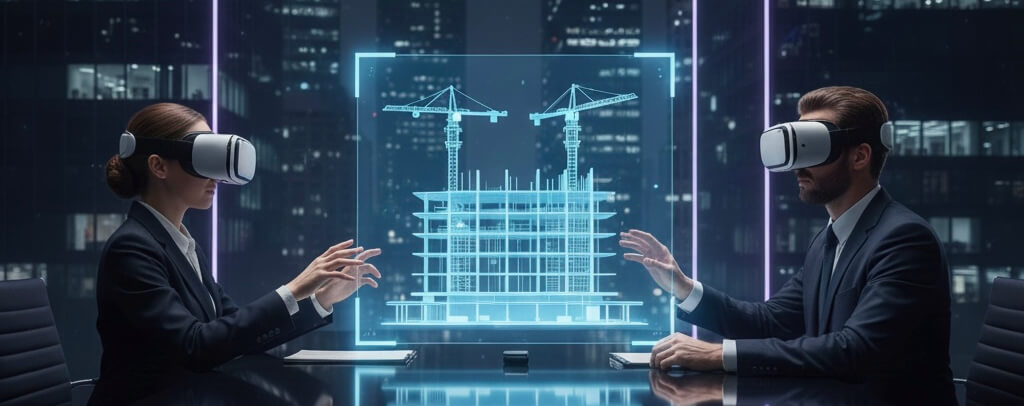
The real estate and architecture industries use VR to provide immersive property visualizations and virtual walkthroughs [3]. Potential buyers and tenants can explore homes, offices, and commercial spaces remotely, saving time and reducing the need for physical visits while architects and designers use VR to review building designs, spatial layouts, and lighting conditions before construction begins.
This visualization capability improves collaboration with clients and reduces costly design changes later in the project lifecycle [2]. Interior designers also rely on VR to showcase furniture placement, color schemes, and material choices in realistic environments [3]. In this case, virtual reality has become a powerful tool for accelerating decision making and enhancing client confidence in real estate projects.
The tourism industry is leveraging VR to offer virtual destination previews that inspire travel decisions [3]. Travelers can explore landmarks, hotels, and attractions virtually before booking trips, enhancing marketing effectiveness [3]. VR is also transforming how people experience museums by making art and history more interactive and accessible. Through immersive virtual tours, visitors can explore famous collections from anywhere, removing the need for physical travel and opening access to people with mobility limitations. On the other hand, entertainment companies use VR to create immersive experiences such as virtual concerts, interactive storytelling, and location-based attractions.
VR places audiences inside the experience rather than observing it, increasing emotional engagement and entertainment value [3]. These immersive experiences are expanding the possibilities of digital entertainment beyond traditional screens [3].
Virtual reality is becoming a strategic investment across multiple industries because it enhances training, visualization, and customer engagement [1][2][3]. Healthcare, education, manufacturing, retail, real estate, tourism, and many other industries are now leading VR adoption by applying immersive technology to real-world challenges. As VR platforms continue to evolve, businesses are expected to expand their use of immersive applications to improve efficiency and competitiveness [2]. Organizations that invest in virtual reality today are positioning themselves for a future where immersive digital experiences play a central role in work and everyday life.


