
Virtual Reality Integration in Logistics and Supply Chain: Immersive Training & Simulation
- Introduction
- How VR Is Used in Supply Chain and Logistics
- Warehouse Operations Simulation
- Virtual Training for Workers
- Benefits of VR and Immersive Simulation in Logistics
- Enhanced Skill Retention
- Safety
- Efficiency and Operational Consistency
- Flexibility
- Enhanced Decision-Making and Problem Solving
- Challenges and Considerations
- Conclusion
- SynergyXR. (2025). VR In Supply Chain & Logistics Training - SynergyXR. https://synergyxr.com/resources/learn/blogs/vr-in-logistics/
- ArborXR. (2025, January 29). VR Training in Logistics: An In-Depth Review with Real World Examples - ArborXR. https://arborxr.com/blog/vr-training-in-logistics
- Avni, N. (2023, September 11). How VR is Reshaping the Logistics Industry - TheFastMode. https://www.thefastmode.com/expert-opinion/33231-how-vr-is-reshaping-the-logistics-industry
In logistics and supply chain management, VR is beginning to play a major role, from training warehouse workers to optimizing operational workflows [1]. As supply chains grow more complex and demand rises for both speed and accuracy, businesses are exploring VR as a tool to improve training, safety, and efficiency [1]. This shift represents a new frontier in logistics where immersive simulation supports both human performance and operational excellence. The potential of VR in logistics is vast and can help companies adapt to rapid changes in demand, regulation, and workforce dynamics [3].
Companies use VR in logistics for a variety of training and operational purposes.
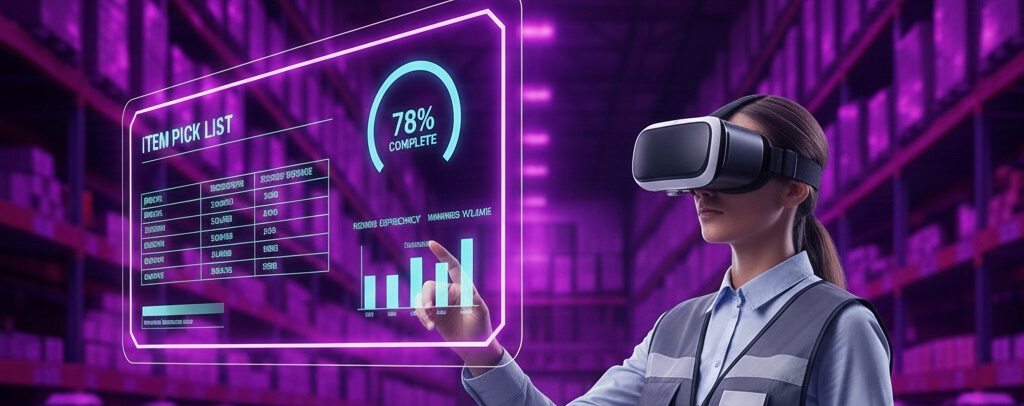
This immersive training powered by VR recreates warehouse environments, including rack aisles, forklifts, loading docks, and inventory flow. Workers can practice tasks such as picking, packing, sorting, and inventory management in a safe virtual environment before handling real goods [1][2]. This gives employees a chance to experience real-world workflows without the risks of equipment damage, injury, or costly mistakes [2].
Not only that, VR also helps with warehouse operations planning and layout optimization. Logistics managers can simulate how goods move through a warehouse, how aisles, shelves, and storage zones are structured, and how different layouts affect throughput and safety [2]. This kind of virtual rehearsal can identify bottlenecks, optimize workflows, and improve space utilization before any physical reorganization takes place [2].
VR extends to training for drivers, equipment operators, and transport personnel. For example, simulated scenarios can include navigating traffic, dealing with variable weather conditions, handling loading and unloading safely, and responding to emergencies, all within a controlled virtual environment [2]. This prepares transport staff for real-world challenges without putting them at risk during training [2].
VR also supports safety and compliance training. Logistics often involves heavy machinery, hazardous materials, or complex manual handling, which pose risk for accidents. By simulating hazards, protocols, and emergency situations, VR training helps workers learn safe practices and emergency responses without real danger [2][3]. Such immersive safety training is more engaging and effective than traditional classroom-based lectures or manuals [3].
In terms of locations, VR can be used for remote collaboration and workforce training across locations. Companies with warehouses in different regions can deploy the same VR training module globally, ensuring consistent skill standards and reducing the need for travel or physical training infrastructure [2][1]. This helps maintain uniform training quality and supports scalability for large logistics operations [1].
Because VR is immersive and interactive, employees tend to learn faster and remember procedures better compared to traditional training methods [2][3]. New hires can become job-ready in a shorter time, and experienced staff can refresh critical procedures regularly without disrupting operations [3].
With VR, workers can practice high-risk tasks and emergency protocols in a risk-free environment. This reduces the probability of workplace accidents, equipment damage, or costly errors related to handling dangerous loads or heavy machinery [2][1].
VR training ensures that all employees, regardless of location or prior experience, receive standardized instruction [2]. This reduces variability in performance and helps maintain consistent quality across different sites [1].
VR training modules can be reused, updated, or replicated easily across locations. This allows logistics firms to adapt quickly when introducing new workflows, equipment, or safety protocols [2].
By simulating entire logistics processes, managers can visualize complex operations, foresee potential issues, and experiment with different strategies before implementing changes in real life [1][2].
Despite the many benefits, adopting VR in logistics comes with challenges. Initial setup can be costly because of hardware, software development, and the need to digitize existing warehouses and processes [2]. For small or mid-sized operators, this investment may be a barrier. Another concern is adoption and learning curve. Some workers may resist new technology or take time to get comfortable with VR interfaces, especially if they are accustomed to traditional hands-on training [3]. Adequate support and user-friendly design are essential to ensure adoption succeeds.
Second, a VR module must reflect real warehouse dimensions, equipment behavior, and workflow constraints accurately. If the simulation differs significantly from real conditions, training outcomes may not translate effectively to actual operations [1]. Finally, ongoing maintenance is needed. As warehouses update layout or machinery, VR models must be updated accordingly, or else the simulation becomes outdated and loses its training value [2]. Companies must plan for periodic updates and quality checks.
Virtual reality and immersive simulation are reshaping how logistics and supply chain companies train employees, plan operations, and manage risk [1][2][3]. By allowing workers to learn and practice in safe, virtual environments, VR helps reduce accidents, improve skills, speed up onboarding, and enhance operational efficiency. These benefits make VR a powerful tool for modern logistics, especially for companies facing high turnover, rapid growth, or complex supply chain demands [2].
The advantages of VR training extend beyond individual workers. They help standardize training globally, reduce costs, and support scalable growth without compromising safety or quality [3]. As logistics continues to evolve and face pressure to deliver faster and smarter, VR-based training and simulation could become a standard part of supply chain operations [1].


