
Why Digital Twins Are Transforming Oil and Gas Operations in 2026
- What Is a Digital Twin and Why It Matters for Oil and Gas
- Key Benefits of Digital Twin Adoption in Oil and Gas
- Predictive Maintenance and Reduced Downtime
- Optimized Asset Performance and Enhanced Efficiency
- Improved Safety and Risk Management
- Better Decision-Making and Lifecycle Management
- Cost Savings, Environmental Monitoring, and Regulatory Compliance
- Strong Growth in the Global Market
- Real-World Applications and Adoption Across the Industry
- Challenges, Risks, and Considerations
- Conclusion
- Standish, R. (2025). How AI Is Transforming Digital Twins In The Oil And Gas Sector - Upstream. https://www.upstreamonline.com/sponsored-content/hexagon/how-ai-is-transforming-digital-twins-in-the-oil-and-gas-sector/
- Bhadauria, S. (2025, May 21). How Oil & Gas And Chemicals Companies Can Drive Value With Digital Twins - EY. https://www.ey.com/en_us/industries/oil-gas/digital-twins-how-energy-companies-can-drive-value
- AstuteAnalytica India Pvt. Ltd. (2025, November 25). [Latest] Digital Twin in Oil & Gas Market to Reach US$1,137.32 Million by 2033 | Astute Analytica - Globe Newswire. https://www.globenewswire.com/news-release/2025/11/05/3181359/0/en/Latest-Digital-Twin-in-Oil-Gas-Market-to-Reach-US-1-137-32-Million-by-2033-Astute-Analytica.html
- Energies & Media Staff. (2025, May 11). Digital Twins in Oil & Gas: Real Results from Top Energy Companies - Energies Media. https://energiesmedia.com/digital-twins-in-oil-gas-real-results-from-top-energy-companies/
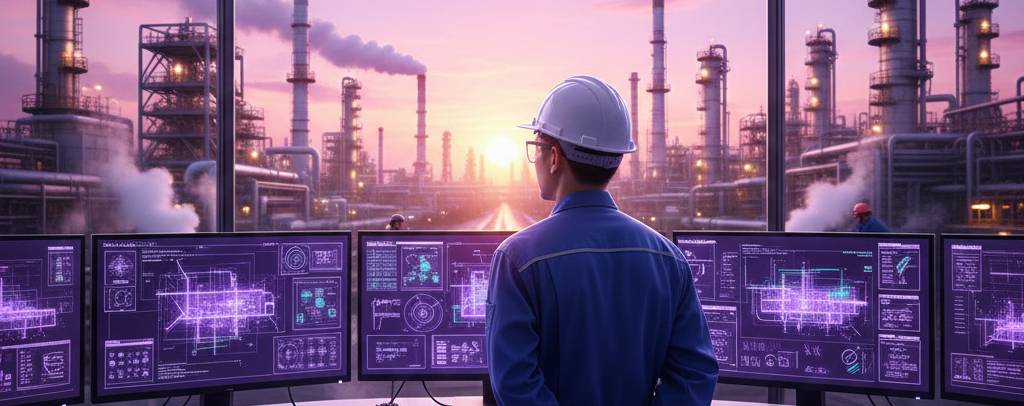
A digital twin is a virtual replica of a physical asset, process, or system that is updated in real time through sensors, analytics, and connected technologies [1]. In the oil and gas industry, this means companies can create dynamic digital models of drilling rigs, pipelines, refineries, or offshore platforms that reflect actual operating conditions [2].
This technology makes it possible to monitor equipment health, simulate operational scenarios, anticipate failures, and optimize production without exposing real assets to risk [1]. With the help of digital twins, decision-making becomes more predictive, accurate, and data driven [2].
One of the most transformative advantages of digital twins is predictive maintenance. Real-time performance data is continuously compared to ideal operating models to identify deviations or emerging issues before they escalate into critical failures [1]. This approach helps eliminate unplanned shutdowns, which can cost millions in lost production.
Digital twins help operators simulate a range of production and drilling scenarios to determine optimal strategies. This leads to higher yields, reduced waste, and better energy efficiency across facilities [1]. For example, virtual models of wells or reservoirs provide predictions of reservoir behavior under different extraction strategies, enabling smarter decision-making and improved overall productivity [2].
Oil and gas operations often involve hazardous environments that include extreme pressure systems, offshore conditions, and flammable materials. Digital twins allow companies to model hazardous scenarios such as pipeline leaks, pressure spikes, or emergency shutoffs in a safe virtual space [1]. Workers can be trained with realistic emergency simulations without exposing themselves to real danger, which leads to better safety preparedness [2].
Digital twins support the entire asset lifecycle. Companies can monitor performance and wear over time and plan maintenance, upgrades, and replacements based on actual usage conditions rather than estimations [2].
By minimizing downtime and improving efficiency, digital twins significantly reduce operational costs. They also help track emissions, energy use, and environmental risks, which assists companies in meeting regulatory requirements and sustainability goals [1].
The demand for digital twin technology in the oil and gas industry is growing quickly. Market research indicates that the sector could reach more than 1.1 billion dollars by 2033, showing the increasing reliance on real-time monitoring and advanced analytics [3].
Many companies in the oil and gas sector are already using digital twin solutions in upstream, midstream, and downstream operations [2]. Drilling teams use digital twins to test extraction scenarios before implementing them in the field, which reduces risk and increases drilling accuracy [2].
Refineries rely on real-time digital models to monitor machinery such as turbines, compressors, and valves. The ability to detect early signs of wear helps prevent breakdowns and ensures smoother operations [1]. Pipeline networks also benefit from digital twins. Virtual replicas allow operators to track flow rates, detect early-stage leaks, and identify pressure inconsistencies without shutting down systems [2].
Digital twins are becoming more powerful through integration with artificial intelligence and IoT systems. These combined technologies provide automated alerts, remote monitoring, and real-time diagnostic capabilities. Teams can perform inspections from remote locations, which improves safety and reduces the need for physically demanding on-site work [4].
Another important trend is the availability of scalable digital twin platforms for smaller and mid-size companies. These cloud-based tools make it possible for organizations of all sizes to benefit from advanced digital simulation and analytics [4].
While digital twins offer many advantages, they come with challenges. Initial costs for sensors, data infrastructure, and analytics software can be high, especially for smaller organizations [1]. Data quality is another critical factor. If sensor data is inaccurate or delayed, a digital twin can produce misleading predictions. Continuous calibration and regular validation are necessary to maintain accuracy [2].
Second, legacy equipment creates additional obstacles. Many older oil and gas facilities rely on outdated systems that are not designed for real-time data integration. Modernizing these systems requires investment and technical expertise [2]. Cybersecurity is also a major consideration. Digital twins rely on constant data transmission, which creates vulnerabilities. A breach could expose sensitive operahttps://www.globenewswire.com/news-release/2025/11/05/3181359/0/en/Latest-Digital-Twin-in-Oil-Gas-Market-to-Reach-US-1-137-32-Million-by-2033-Astute-Analytica.htmlional data or compromise system reliability [3]. Finally, virtual models cannot completely replace physical inspections and human expertise. Digital twins are most effective when used alongside traditional engineering knowledge and robust safety practices [1].
Digital twin technology is rapidly reshaping the oil and gas industry by creating smarter, safer, and more efficient operations. These virtual models support predictive maintenance, optimize production, enhance worker safety, and improve overall asset management [1][2][3][4].
Although adoption requires investment and strong data governance, the long-term benefits are substantial. Companies that embrace digital twins gain a competitive advantage through reduced downtime, lower costs, improved sustainability, and more resilient operations. As global energy demands evolve, digital twins offer a forward-looking solution that supports innovation, efficiency, and operational excellence for the next generation of oil and gas development.


